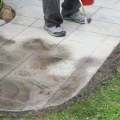
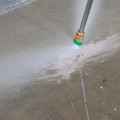
A sample photo can help describe the finish you like, but it cannot show exactly how a sealer will look on your concrete. Before approving a full application, discuss a representative test area with the contractor. Agree on what will be reviewed and when the result will be ready to judge.
Identify the product and the surface
Record the proposed product name and ask the contractor to explain its suitability for your surface and intended use. Include any known history of earlier sealers or coatings. If that history is uncertain, flag it before the work begins rather than assuming the surface is bare.
For example, Euclid Chemical’s REZ-SEAL technical sheet recommends a small test area to confirm appearance and directs users to check compatibility when applying that product over previously sealed concrete. This is an example of why the selected product’s own instructions matter, not a recommendation to use it on every project.
Choose a useful comparison location
Ask the contractor where a test can represent the larger job without creating an unwanted permanent feature. Note differences between repaired sections, shaded areas and the main surface that may affect what you are comparing. Agree on the preparation and application process for the sample so everyone knows what the result represents.
Our guide to choosing a level of gloss or sheen can help you describe your preferences. Bring that description to the sample review rather than relying on words such as “natural” or “shiny” alone.
Review after the specified waiting period
Ask when the manufacturer’s instructions allow the sample to be evaluated and used. Do not assume a freshly applied appearance is the final result. Look at the approved sample in the lighting under which the finished area will normally be seen. Record your observations about color, sheen and visible variation, and ask the contractor to address any unexpected result before proceeding.
Keep the approval with the job record
Photograph the sample and its location, identify the product and record the review date. Note the agreed next step in writing. Keep the technical sheet and the contractor’s care instructions with the completion paperwork.
A visual sample is a communication tool, not proof of every performance characteristic. Questions about suitability, maintenance and safe use still belong in the product and installation discussion. A clear sample record simply gives both parties a shared reference for the appearance that was approved.